
Audio
Capture.

The fundamental act of recording music is the process of arresting physical acoustic energy and permanently translating it into an electrical signal. In the modern era, this sacred process has been tragically reduced to mathematical quantization, where raw human emotion is sanitized by digital algorithms designed to correct imperfections. Arelan Records fundamentally rejects this sterile methodology. Our primary production service is engineered to act as a colossal, uncompromising magnifying glass for the human performance. We do not manufacture artificial perfection; we meticulously document reality. The Arelan tracking facility is a bastion of acoustic integrity, built upon the understanding that the most profound records in history were created by musicians reacting to one another in a tuned physical space, breathing the same air, and pushing analog circuitry to the absolute limits of its tolerance.
When an artist enters our facility for a tracking session, they are stepping into an environment designed to strip away distractions and force a confrontation with their own material. The infrastructure we provide is intimidating by design. We have curated a tracking space where the silence is absolute, and the equipment is ruthlessly revealing. There are no software plugins capable of replicating the terrifying weight of a drum kit interacting with a thirty-foot wooden ceiling, just as there are no algorithms that can synthesize the agonizing rasp of a vocalist pushing their vocal cords into physical exhaustion. Our engineers act as sonic architects, utilizing an arsenal of legendary vintage transducers, heavily modified magnetic tape machines, and discrete analog consoles to physically mold the transient response of every instrument before it ever hits a recording medium. We demand that decisions be made with absolute conviction in the room, committing to tones and performances that will dictate the entirety of the ensuing album.
The
Summing
Bus.
Large Format Tactile Mixing
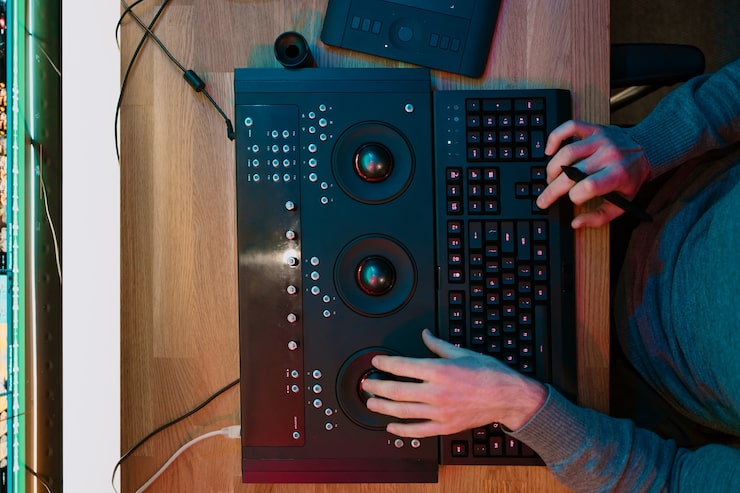
At the exact geographical center of our primary control room sits the undisputed heart of the Arelan production workflow: a meticulously maintained, large-format 72-channel British analog mixing console. In an industry obsessed with working "in the box"—where mixing is performed by clicking a mouse on a two-dimensional computer screen—we maintain an unwavering commitment to tactile, physical manipulation. This massive piece of engineering is not merely a routing matrix; it is an incredibly complex musical instrument in its own right. Every single audio signal that enters our facility must pass through its heavy, transformer-coupled preamplifiers, imparting a specific harmonic saturation and phase coherency that binds individual tracks into a massive, unified stereophonic image.
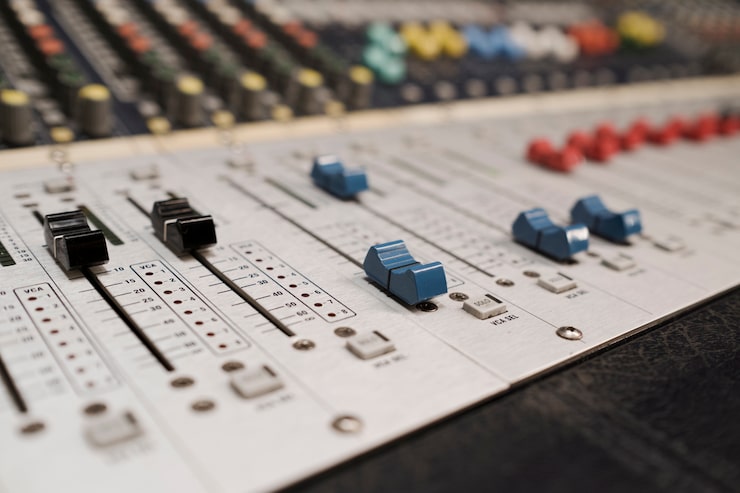
The physics of analog summing cannot be mathematically perfectly emulated. When seventy-two tracks of densely layered audio are pushed simultaneously into the console's master bus, the electrical components react dynamically. The power supply strains slightly under the immense load, the transformers introduce sub-harmonic distortion, and a beautiful, microscopic amount of crosstalk bleeds between the copper traces. This electrical chaos is precisely what engineers refer to as "glue." It softens the harsh, brittle transients of digital recording and provides an immense, three-dimensional depth of field. Our engineers ride the physical faders by hand, adjusting levels in real-time as the song breathes, injecting a human kinetic energy into the final mixdown that sterile volume automation curves simply cannot replicate. Operating this machinery requires years of dedicated apprenticeship, an acute understanding of gain staging, and a willingness to commit to destructive equalisation choices on the way to the tape machine.
Furthermore, the psychological impact of the console on the artist cannot be overstated. Sitting behind a piece of hardware that has shaped the history of recorded music instils a profound sense of gravity. It forces the musicians to recognize that they are not engaging in a disposable, laptop-driven bedroom project, but rather participating in a historic, deeply serious architectural process. The console demands respect, and in return, it provides a sonic footprint that is infinitely wider, deeper, and more emotionally resonant than any software equivalent currently on the market.
The Transducer Arsenal
The most critical stage of the entire recording process occurs in the first physical inch of the signal chain: the moment acoustic air pressure violently strikes a hyper-sensitive diaphragm.
Valve Condensers
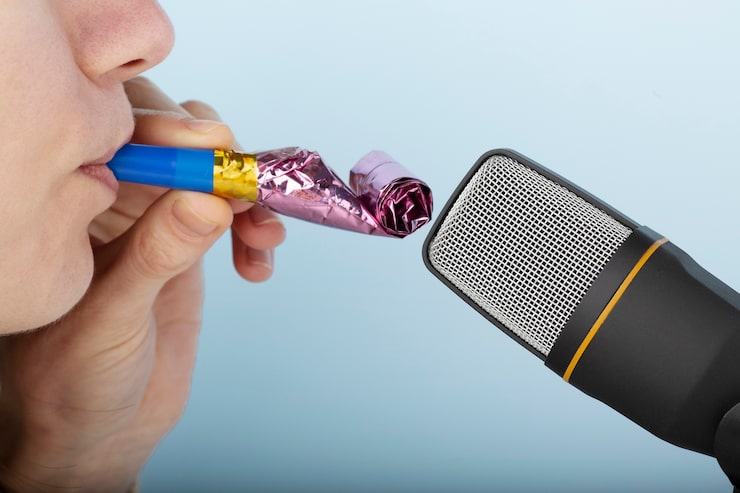
Our vault contains highly coveted, sequential stereo pairs of German and Austrian vacuum tube microphones manufactured in the 1950s and 60s. These microphones utilize original brass capsules and dangerously high-voltage power supplies to capture vocals and acoustic instruments with a frightening level of microscopic detail and midrange forwardness. The tubes impart a highly musical, even-order harmonic distortion that allows a lead vocal to effortlessly slice through an incredibly dense rock or electronic mix without the need for aggressive, phase-destroying equalization.
Ribbon Mechanics
For capturing brutal transients—such as bludgeoning snare drums, deafening brass sections, or heavily overdriven guitar amplifiers—we deploy our extensive collection of passive and active ribbon microphones. Operating on an incredibly thin piece of corrugated aluminum suspended within a massive magnetic field, these transducers physically cannot respond quickly enough to harsh, brittle high frequencies. This mechanical limitation results in a beautifully dark, velvety, and immensely heavy low-midrange capture that provides the foundational weight required for aggressive, industrial, or cinematic arrangements.

Dynamic Arrays
While lacking the fragile sensitivity of condensers, moving-coil dynamic microphones are absolutely essential for surviving extreme sound pressure levels. We utilize dozens of perfectly maintained broadcast dynamics to capture the raw, concussive impact of kick drums and aggressive vocal takes. By meticulously aligning the phase relationship between a distant valve condenser and a close-placed dynamic microphone on a single source, our engineers can construct a hyper-realistic, three-dimensional sonic image that captures both the attack of the instrument and the colossal decay of the surrounding acoustic room.

The Live Room
No amount of elite vintage hardware can salvage a recording captured in an acoustically hostile environment. The physical dimensions and material composition of the tracking room define the absolute boundaries of what is sonically possible.
The Arelan Records primary live hall is an absolute marvel of brutalist acoustic engineering. Spanning over three thousand square feet with dramatically vaulted thirty-foot ceilings, the space was constructed entirely without parallel walls to completely eradicate the buildup of destructive standing waves and flutter echo. The floor is built upon a massive system of decoupled neoprene isolators, entirely floating the recording space from the external foundation of the building. This extreme measure ensures that the subsonic rumble of heavy London traffic or underground rail systems cannot contaminate the delicate diaphragm of an ambient room microphone recording a classical cello suite.
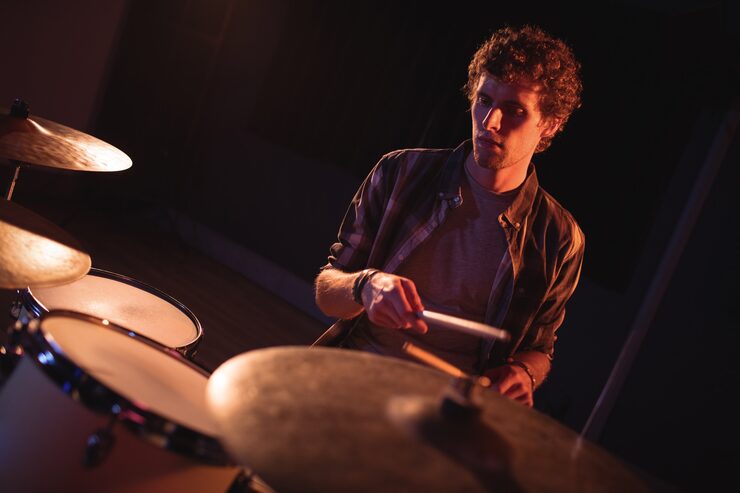
The walls are a complex, asymmetrical mosaic of absorptive rockwool baffling and highly reflective, custom-milled wooden quadratic diffusers. This duality allows our engineers to strictly control the acoustic decay. A drum kit placed against the stone diffusion wall will sound like a terrifying artillery barrage, generating explosive, chaotic early reflections that add immense perceived volume and aggression to a rock record. Conversely, moving an acoustic guitarist into the heavily trapped, absorptive alcoves of the room will yield an intensely intimate, suffocatingly dry capture, allowing the listener to hear the microscopic friction of skin against steel strings. We use the room itself as a massive, untamed equalizer, physically positioning musicians to achieve the perfect tonal balance before a single knob is turned on the mixing console.
Isolation Booths
Four dedicated, line-of-sight isolation chambers flank the main hall. These completely deadened acoustic spaces allow for the live tracking of notoriously loud amplifiers or scratch vocals simultaneously with the rhythm section, ensuring total track separation without destroying the kinetic energy of a full-band live performance.

Magnetic
Saturator.
Despite the infinite convenience of digital hard drives, the Arelan facility steadfastly maintains heavily modified, Swiss-engineered 24-track 2-inch tape machines. The physical medium of magnetic tape is not merely a storage format; it is an incredibly aggressive, highly musical dynamic processor. When loud transient signals—such as a heavily struck snare drum or a violently picked bass guitar—are driven intensely into the iron oxide particles of the tape, the medium physically cannot capture the peak linearly.
Instead, it gracefully compresses the audio, shaving off the brittle digital harshness and generating a massive wash of even-order harmonic distortion. This phenomenon, known as tape saturation, naturally glues a rhythm section together, adding a terrifying weight and perceived loudness that digital limiters fail to achieve without introducing fatiguing artifacts. Furthermore, the inherent mechanical inconsistencies of the tape transport—microscopic fluctuations in speed known as wow and flutter—impart a subtle, chorusing movement to the audio that the human brain interprets as organic life.
Recording to tape enforces a draconian discipline upon the artist. Because tape is wildly expensive and offers extremely limited track counts, musicians cannot rely on the crutch of unlimited takes or copy-pasting choruses. They must be viciously rehearsed. They must commit to a performance from beginning to end. This fear, this absolute necessity to get it right in the room while the massive reels are spinning, forces a level of adrenaline and raw emotional delivery out of a performer that completely transforms the intensity of the final record. Tape is expensive, tape is difficult, and tape is uncompromisingly superior.
Digital Interface
We are not stubborn luddites. We weaponize modern digital tools strictly to enhance, rather than replace, our analog infrastructure.
While our philosophy is deeply rooted in the heavy iron of the analog era, we recognize the incredible surgical precision offered by modern digital audio workstations. Our facility operates on a highly complex, custom-built hybrid infrastructure. After the acoustic signals are shaped by our vintage microphones and saturated by the magnetic tape machines, they must be converted into digital data for intricate editing and archival. This conversion process is fraught with peril. Cheap analog-to-digital converters will instantly strip the width and depth from a beautifully tracked analog signal, rendering the entire process futile.
To combat this, Arelan Records has invested heavily in mastering-grade, transformer-coupled AD/DA conversion systems. These massive external chassis utilize discrete Class-A circuitry and hyper-accurate atomic clocks to capture the analog waveform with absolutely zero phase smearing or jitter. When the signal enters our digital ecosystem, it perfectly retains the massive low-end and silky high-frequencies generated by the console. This pristine digital mirror allows our engineers to perform surgical tasks—such as microscopic vocal timing adjustments or the removal of extraneous mechanical noises—without ever degrading the acoustic integrity of the core performance.
By utilizing the digital realm purely as an infinitely flexible tape machine rather than a substitute for physical gear, we offer our artists the absolute best of both paradigms. They benefit from the ruthless speed and non-destructive editing capabilities of the 21st century, firmly anchored to the undeniable sonic supremacy and physical weight of mid-20th-century electronic engineering. It is a seamless, highly engineered bridge across eras.
The Outboard Vault
Dynamics & Equalization
Beyond the central console, the tracking rooms are flanked by towering racks of dedicated analog outboard processors. These monolithic units are tasked with violently shaping the dynamic range and tonal balance of individual instruments. Our collection of Fairchild, Pultec, and Teletronix units represent the absolute pinnacle of mid-century electrical design. We utilize optical compressors that rely on a physical lightbulb illuminating a photo-resistor to violently clamp down on the screaming peaks of a bass guitar, imparting a sluggish, syrupy sustain that is impossible to synthesize with code.
Our engineers employ passive tube equalizers to carve massive, broad strokes into the frequency spectrum. Unlike modern digital EQs which can introduce harsh phase anomalies when pushed to extremes, these vintage passive units allow us to boost sub-bass frequencies by terrifying amounts without destroying the clarity of the source material. We routinely run sterile, digitally synthesized keyboard tracks through these physical copper transformers simply to impart grit, weight, and chaotic analog life to the performance before it hits the master bus.

"We do not use plugins. If a vocal requires compression, we route the electrical voltage out of the computer, push it through an actual glowing vacuum tube, and record the physical result."
— Chief Engineer
The Discipline of Pre-Production
Structural Deconstruction
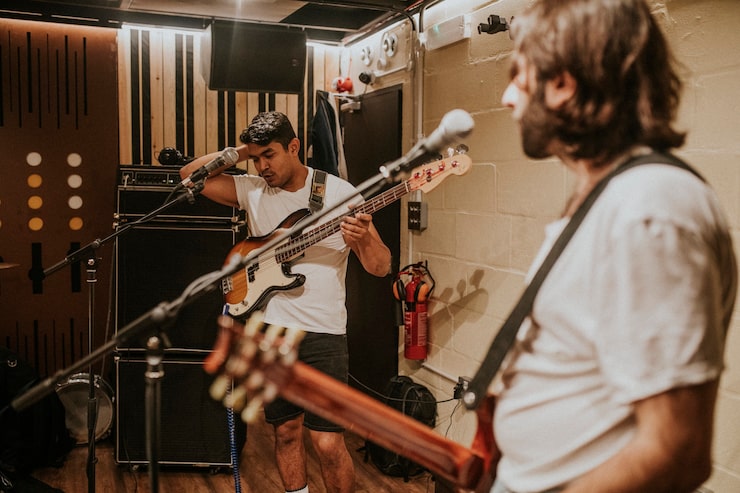
Because our tracking methodology relies so heavily on committing to sounds and capturing live kinetic energy, entering the main studio without absolute structural certainty is a catastrophic waste of capital. Therefore, Arelan Records mandates a rigorous, highly scrutinized pre-production phase for every project. Before artists are allowed near the vintage microphones or the tape machines, they are sequestered in our stark, acoustically dry rehearsal bunkers. Here, our producers act as ruthless editors, dissecting every song down to its absolute bare bones. If a track cannot emotionally resonate when played solely on an acoustic guitar or a piano, no amount of massive analog production will save it.
Tempo Mapping & Arrangement
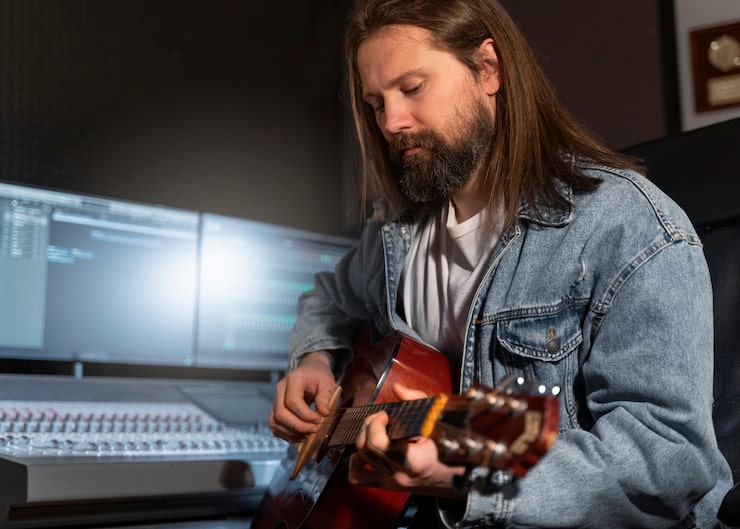
During this grueling phase, we finalize the micro-arrangements. We determine exactly where the drummer must push ahead of the metronome to create tension, and where they must drag behind it to create an immensely heavy groove. We strip away superfluous instrumental layers that clutter the midrange frequency spectrum, ensuring that the primary vocal narrative has absolute authority over the mix. This intense psychological and musical preparation guarantees that when the red light finally illuminates in the main tracking hall, the musicians are operating entirely on muscle memory and raw adrenaline, completely unburdened by structural doubt. The sweat shed in pre-production buys immortality in the master record.

The Final
Architecture.
Tracking is the acquisition of raw materials; mixing is the brutal construction of the monument. Once the acoustic capture is complete, our mixing engineers begin the agonizing process of balancing dozens of dense audio tracks into a cohesive, stereophonic reality. Utilizing the massive headroom of our analog consoles, we carve out specific frequency pockets for every instrument, ensuring absolute clarity without sacrificing the overarching wall of sound. We deploy physical plate and spring reverberation units to create an artificial depth of field, pushing background vocals miles behind the speakers while placing the lead vocal directly against the listener's eardrum.
Furthermore, the Arelan facility is at the absolute forefront of immersive audio technology. Our secondary mix room is fully certified and equipped with a monstrous 9.1.4 Dolby Atmos monitoring array. We take the densely saturated analog stems from the main console and project them into a three-dimensional acoustic space. This is not a gimmick; it is an entirely new canvas. It allows us to physically unwrap a suffocatingly dense industrial or orchestral mix, placing synthesizer pads above the listener's head and routing chaotic guitar delays directly behind them, resulting in a visceral, terrifyingly immersive listening experience that fundamentally redefines how the album format is consumed.
Subject Your Project
To The Process.
The Arelan recording facility is not available for hourly rental. We strictly partner with artists and labels committed to executing full-length albums or comprehensive EPs under our rigorous analog methodologies.
If you require uncompromising acoustic capture and the heavy iron of the mid-20th century, we are ready to supply the infrastructure.
Initiate Studio Booking